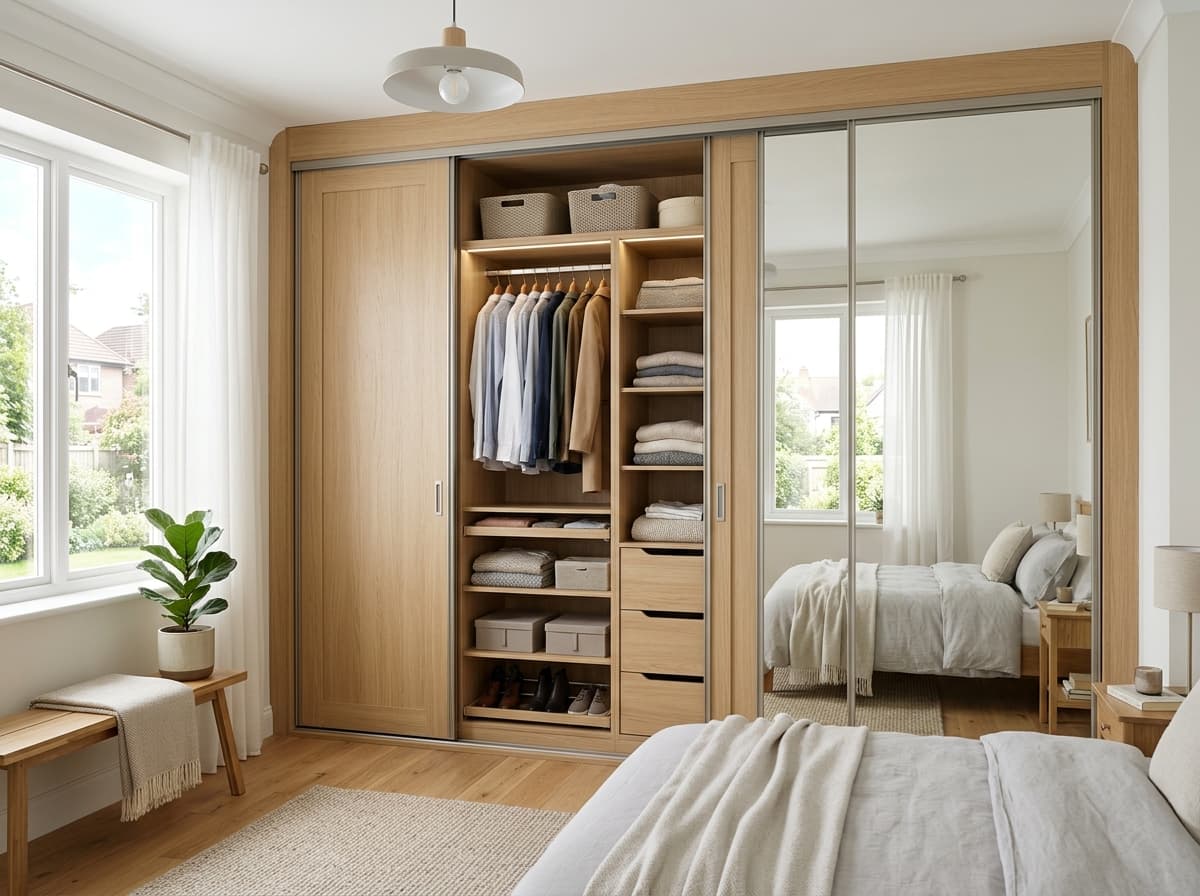
Wardrobe Organisation Tips for Dubai Homes: 2026 Guide
A well-designed wardrobe is only as good as how you use it. Even the best custom closet becomes chaotic without a maintenance system. These tips are specifically adapted for Dubai residents dealing with humidity, diverse wardrobes (business, casual, beachwear, ethnic wear), and seasonal clothing rotation.
The Seasonal Swap. Dubai effectively has two seasons: hot (May-September) and mild (October-April). Rotate your wardrobe twice a year. Off-season items go to upper shelves or vacuum bags in labeled boxes. On-season items occupy the accessible zones. This simple practice frees up 30-40% of your daily-use space.
Humidity Protection. Cedar blocks in drawers and on shelves absorb moisture and deter moths. Silica gel packets in shoe boxes and leather storage areas absorb excess humidity. Avoid storing leather, silk, or wool in plastic bags (traps moisture). Use breathable cotton garment bags for valuable items. Run the AC for at least 2 hours in rooms where wardrobes are located, even when you are away on vacation.
The KonMari Fold for Dubai. Vertical folding in drawers shows every item at a glance. Group by category: t-shirts in one section, workout wear in another, casual shorts in a third. In Dubai, where wardrobes include more lightweight items (linen shirts, cotton tees, swimming gear), vertical folding is especially effective because these items fold flat and stack efficiently.
One In, One Out. For every new item that enters the wardrobe, one item exits (donated, sold, or discarded). This prevents the gradual accumulation that turns a spacious closet into a cramped one. Dubai's seasonal sales (Dubai Shopping Festival, DSS) tempt large hauls; the one-in-one-out rule provides discipline.
Zone Your Wardrobe. Assign specific zones for specific categories: work clothes together, casual wear together, activewear together, occasion wear together. Within each zone, organize by color (light to dark, left to right). This system makes outfit selection faster and ensures you see and use everything you own.
Hang Smart. Use matching velvet hangers for a uniform look (they grip fabrics and prevent slipping). Face all hangers in the same direction. After wearing an item, return the hanger facing backward. After 6 months, anything still facing forward has not been worn and is a candidate for donation.
Shoe Storage. Store shoes in the boxes they came in with a photo attached to the front, or on angled shelves where you can see every pair. Never pile shoes on the closet floor; they collect dust, get scuffed, and create clutter. Moisture-absorbing inserts in leather shoes prevent mold growth in Dubai's humidity.
Monthly Maintenance. Spend 15 minutes per month: refold items that have become messy, return misplaced items to their zones, wipe shelves with a damp cloth, and check for any items that need repair or cleaning. This small investment prevents the gradual disorder that makes wardrobes stressful.
Organising Occasion Wear. Dubai wardrobes typically include a category that is absent from most wardrobe organisation guides written for other markets: formal occasion wear for events, Eid gatherings, and business meetings with a strong regional dress code. Abayas, thobes, kaftans, and formal floor-length garments need dedicated long-hang space at 1,600-1,800mm clearance. They cannot share a standard short-hang section without compression damage. If your wardrobe does not have a dedicated long-hang zone, reorganize to create one: typically one arm of an L-shaped layout or a full single rail on one wall. Garment bags on individual hangers keep occasion wear dust-free between use. Label each bag so you can find specific pieces without opening everything. Dedicated shoe storage adjacent to the occasion-wear zone means the entire outfit — clothing, shoes, accessories — can be assembled in one place the evening before a formal event.
Humidity-Proofing Your Storage System. Dubai-specific wardrobe organisation must account for what generic guides ignore: the interaction between stored items and UAE humidity levels. The seasonal pattern (extreme humidity July to September, lower but still elevated October to April) means passive humidity management is not optional — it is maintenance. Cedar blocks lose effectiveness after 18 months and need replacing. Silica gel sachets should be checked monthly during summer and replaced when the indicator turns pink. Leather goods benefit from conditioning cream every 6 months to prevent drying and cracking from the humidity swings between humid outdoors and dry air-conditioned interiors. For built-in wardrobes specifically, the choice of material grade at installation determines your long-term maintenance burden. Moisture-resistant MDF with a fully sealed lacquer or laminate surface requires minimal maintenance; standard MDF absorbs humidity at joins and panel edges over time, causing swelling that eventually prevents drawer and door alignment. For a full breakdown of wardrobe material options and their performance in UAE conditions, see our <a href="/wardrobe-materials-guide">wardrobe materials guide</a> and the comparison of <a href="/blog/mdf-vs-solid-wood-wardrobe">MDF vs solid wood for Dubai wardrobes</a>.
Wardrobe Organisation by Dubai Community. The organisation challenges in a Palm Jumeirah villa differ from those in a JVC apartment or a Mirdif family home. Palm Jumeirah and JBR coastal residents face the highest humidity exposure — sliding doors on fitted wardrobes here should be checked twice a year for track alignment, as the combined humidity and salt air accelerates wear on floor runners. Monthly silica gel rotation is essential. In Arabian Ranches and Dubai Hills villas with dedicated master closet rooms (14-20 sqm), the risk is underusing the available space: without zone planning, large closets default to dumping grounds rather than organised storage. Divide the room into clear zones — his, hers, seasonal storage, accessories — and respect the zones. JVC, Discovery Gardens, and Dubai Marina apartments have compact bedrooms (10-14 sqm) where the wardrobe typically takes a full wall. In these spaces, vertical organisation matters most: lower rails for items used daily, upper rails for less-frequent pieces, and over-door organisers for small accessories. Mirdif and Springs family homes often serve 4-6 residents from the same wardrobe room; label storage by person, not category, and run a seasonal sort every 6 months rather than waiting until drawers will not close.
Upgrading Organisation Without Replacing Your Wardrobe. If your wardrobe carcass is structurally sound but the internal layout no longer works, an internal refit is often more cost-effective than a full replacement. Replacing fixed shelves with pull-out baskets (AED 300-600 per basket installed), adding a second hanging rail below an existing high rail to double hanging capacity (AED 200-400 per section), and installing pull-out shoe racks (AED 800-1,500 per section) can transform the functionality of an existing wardrobe. These improvements can typically be done in a single day and cost AED 2,000-6,000 for a standard bedroom wardrobe. If the wardrobe's carcass is standard MDF showing swelling or joint failure, a full replacement is the right call; patching a failing carcass costs more long-term than replacing it. For a full analysis of renovation versus replacement costs, see our <a href="/blog/walk-in-closet-renovation-dubai">walk-in closet renovation guide</a>. For booking a free on-site consultation to assess your wardrobe's condition and internal layout options, <a href="https://wa.me/971526001068" target="_blank" rel="noopener">WhatsApp us on 052 600 1068</a>.
Related Guides
Need help designing your perfect wardrobe or closet? Talk to us.