Closet Design Trends 2026: What Dubai Homeowners Are Requesting
What are the latest closet design trends?
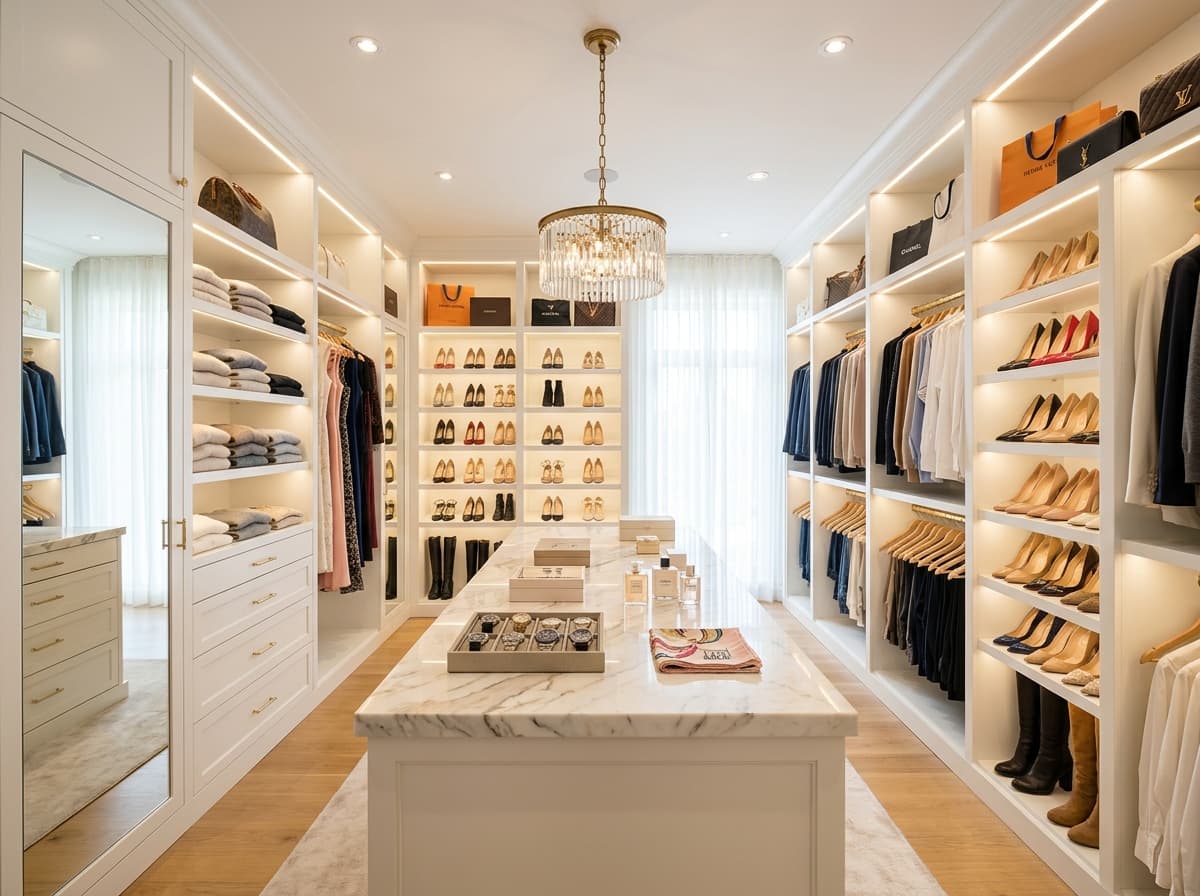
Closet design trends in 2026 reflect a broader shift in how Dubai homeowners think about storage spaces. The dominant direction is away from purely functional, closed-front cabinetry toward warmer finishes, layered lighting, and intentional display that makes the closet feel like a curated room. These closet design trends have been consistent across projects in Palm Jumeirah, Emirates Hills, and the newer communities in Dubai Hills and Mohammed Bin Rashid City. Understanding what is current helps you avoid designing to a taste that is already passing.
Closet design trends: warm and earthy palettes
The material direction that defines closet design in 2026 is warmth. Cashmere lacquers, greige tones, warm taupe, and sand finishes have replaced the cool greys and pure whites that were the default palette from roughly 2016 to 2023. This shift follows a broader movement in interior design toward natural tones and materials that began gaining momentum in 2022 and has now become the dominant request across mid-range and luxury projects alike.
Warm oak veneer panels — used as accents on select door fronts, island sides, or open shelf sections — are the material pairing that elevates a lacquer-dominant scheme from flat to three-dimensional. The combination works because veneer adds grain and texture that catches light differently at different times of day, preventing the visual flatness that can make an all-lacquer closet feel like a showroom display rather than a personal space. For a full overview of current wardrobe materials and their durability in Dubai's climate, see our materials guide.
Closet design trends: zone-based interior organisation
Zone-based design — dedicating specific sections of the closet to specific categories of items — is the single most impactful functional trend in 2026. Rather than applying a standard module grid across the full cabinet run, a zone-based layout begins with a full audit of what will be stored and sizes each section accordingly.
A typical zone plan for a mid-size Dubai walk-in closet (10-14 sqm) includes a double-hanging zone for shirts and jackets, a full-length hanging zone for dresses and formal wear, a deep shelf zone for folded items and bags, a drawer bank for accessories, and an open or glass-front display zone for the items that are most frequently used or most valuable. Each zone is dimensioned to its actual contents rather than to a standard module width, which eliminates the wasted space that accumulates in closets designed to a grid. For more on how zone planning translates into a finished layout, the closet design ideas guide covers the main configurations in detail.
Integrated lighting as a design layer
Integrated lighting is no longer an optional add-on — it is a fundamental part of closet design in 2026. The current approach uses three distinct layers: overhead ambient lighting (recessed panels or a cove detail), task lighting inside cabinet sections (LED strip under shelves, along hanging rails, and inside drawer cavities), and accent lighting inside display niches or glass-front sections.
Motion-triggered interior cabinet lighting has moved from premium feature to standard expectation on projects above AED 20,000. The practical benefit is immediate: you no longer need to hold a rail to find a specific item in a deep cabinet. The aesthetic benefit is that open cabinet sections become display cases when lit correctly. Warm white LEDs at 2700K-3000K are the universal recommendation for Dubai projects because they complement warm lacquer tones and provide flattering light at mirrors. External resources such as Häfele UAE supply the LED strip systems and motion sensors used in most installations at this level.
Closet design trends: materials and finishes to know
Two specific material details have moved from occasional request to recurring theme across 2026 projects. Fluted glass inserts — a vertically ribbed texture applied to glass cabinet doors — obscure the contents of closed sections while adding a decorative quality that reads as custom millwork rather than a standard cabinet door. The ribbed surface catches light and creates subtle shadow lines that add depth to the finished installation.
The second material detail is the mixed-material island: a lacquered or veneer cabinet base topped with a sintered stone or compact quartz surface (Dekton, Neolith, or a compact quartz) rather than matching the island surface to the wall cabinets. This creates a visual break that makes the island feel like a freestanding piece of furniture anchoring the room, rather than an extension of the storage perimeter. Hardware has also shifted: long bar handles in brushed brass or satin black are replacing the integrated push-to-open systems that defined the previous minimalist period. These tactile details add to the boutique aesthetic and are easier to maintain in a high-use environment than the mechanical catches required for handleless operation.
For the full picture on how these trends translate into a specific project — including cost ranges for each decision — visit the walk-in closet overview or reach out via our contact page to discuss your specific space.
Related Guides
Need help designing your perfect wardrobe or closet? Talk to us.