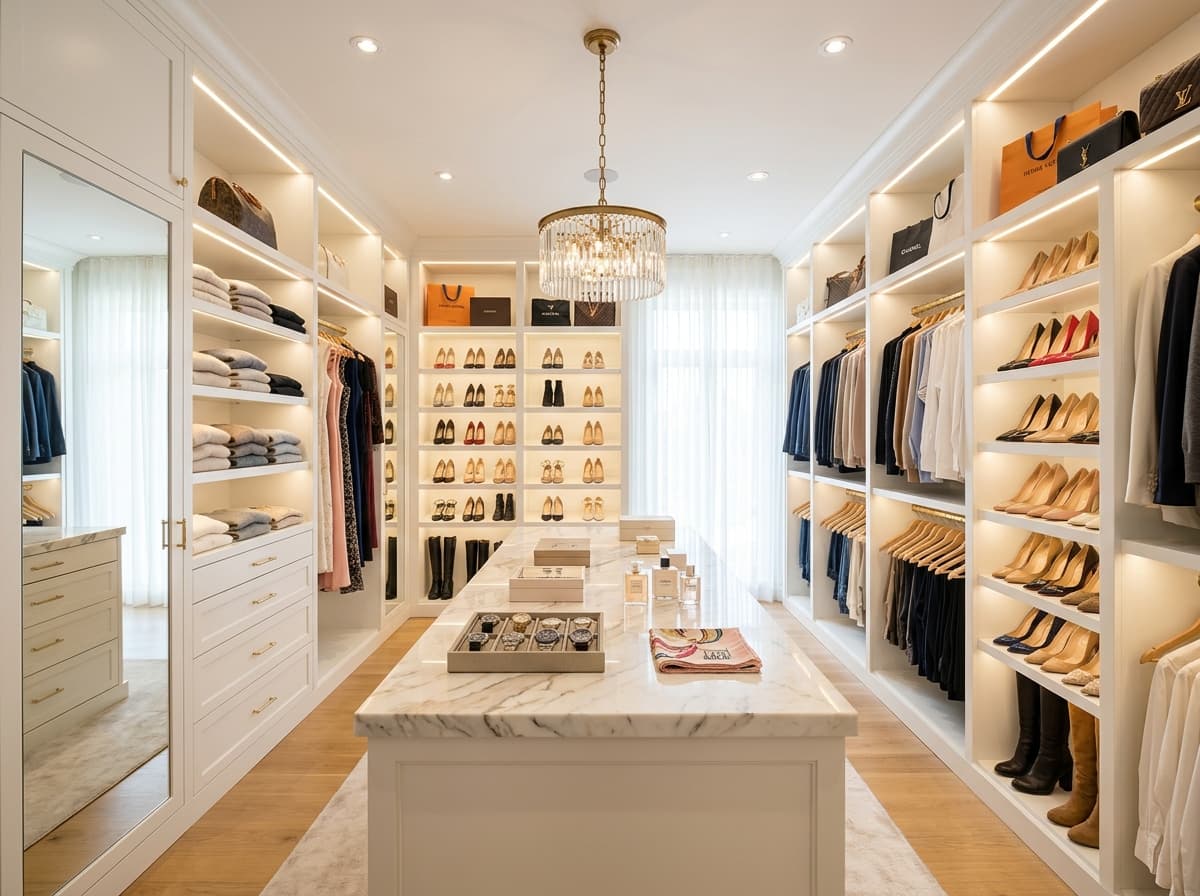
Walk-In or Built-In Wardrobe for Your Dubai Home?
What's the core difference?
A walk-in wardrobe occupies floor space—it's essentially a room, freestanding or against walls, that you walk into. A built-in wardrobe is integrated into the wall itself: the cabinet structure runs wall-to-wall, floor-to-ceiling or partway, and becomes part of your bedroom's architecture. The walk-in is moveable (though not easily); the built-in is permanent. This single fact drives almost every other comparison.
Space requirements and property type
Walk-in wardrobes need dedicated floor area—typically 2m × 2m minimum for a usable, functional space. In Dubai apartments, that's precious square footage you're removing from your bedroom. Villas handle walk-ins gracefully: a 4m × 3m walk-in in a villa master suite feels luxurious and barely dents the room. Built-in wardrobes work in ANY space. A 2m-wide, 2.2m-tall built-in against a bedroom wall gives you wardrobe depth and usability without consuming floor area. Apartments benefit dramatically: renters and small-space owners see no footprint loss. Villas benefit too—they free up floor for seating, additional furniture, or pure openness. If your property is under 30 sqm bedroom space, built-in is the smarter choice. Over 50 sqm with a separate dressing area, walk-in becomes viable.
Flexibility and future changes
Walk-in wardrobes are flexible by definition. Disassemble it, move it, reconfigure the layout—in theory. In practice, a built walk-in in your bedroom is as permanent as your built-in once it's installed. But conceptually and legally, if you're in a rental or short-term property, a walk-in is easier to justify as a tenant improvement that doesn't alter the structure. Built-ins are permanent alterations: you modify the wall, the room. Landlords and future buyers see it as a permanent upgrade to the property. If you plan to move in 3–5 years, a walk-in is less of a commitment. If you're in your forever home, a built-in is an investment that increases property value and stays with the property.
Installation time and disruption
A walk-in wardrobe: design (2–3 weeks), manufacture (4–6 weeks), delivery, installation on-site (2–4 days). Total: 8–12 weeks, minimal disruption once assembly begins—your bedroom is out of commission for a few days. A built-in wardrobe: design (2–3 weeks), manufacture (4–6 weeks), delivery, on-site installation including wall adjustments, plastering, sanding, finishing (1–2 weeks). Total: 9–15 weeks, higher disruption—dust, noise, wall prep for 1–2 weeks. Built-ins take longer because the wall integration is labor-intensive. If you want a fast installation, walk-in is faster once manufacturing is done.
Cost comparison in Dubai
Walk-in wardrobe (compact, 3m × 2m, MDF/standard finish): AED 20,000–AED 30,000. Walk-in (mid-range, 4m × 3m, lacquer/integrated lighting): AED 35,000–AED 55,000. Walk-in (luxury, 5m × 4m, veneer/glass/island): AED 75,000+. Built-in wardrobe (2m wall, single section, MDF): AED 4,000–AED 6,000. Built-in (2m wall, floor-to-ceiling, lacquer, full interior): AED 10,000–AED 15,000. Built-in (4m wall, double-height, premium finishes): AED 25,000–AED 40,000. Per linear meter: MDF built-ins cost AED 800–1,200/lm; lacquer AED 1,500–2,500/lm; veneer AED 2,000–3,500/lm. For small-to-medium bedrooms, a built-in is 40–60% cheaper and far more efficient. For large villas with dedicated dressing rooms, a walk-in competes cost-wise and offers distinct aesthetic impact.
Material durability in Dubai's climate
Both walk-in and built-in wardrobes face Dubai's humidity and heat. The difference lies in ventilation. Walk-ins, being room-sized, naturally air-circulate; you can open a window or door to vent humidity. Built-ins are sealed cabinets—any moisture trapped inside can cause MDF swelling, finish damage, and mold. This is why built-ins require: (1) moisture-resistant board core (18mm WBP-glue MDF minimum, never standard MDF); (2) strategic ventilation gaps (perforated backing, circulation channels); (3) optional dehumidification or desiccant packs inside sealed drawers; (4) regular inspections. Walk-ins, if the bedroom itself has adequate AC and ventilation, naturally stay dry. For high-humidity-prone areas (ground floor apartments near the beach, villas near landscaping), walk-ins have the edge in climate resilience. Both are viable if you specify climate-appropriate materials—but built-ins require more precision in specification.
Customization and interior layout
Walk-ins: You design every inch—multiple hanging zones, shelving, drawers, island, seating, lighting, mirrors, shoe racks. The interior is entirely yours. Built-ins: Customization is limited by the wall space. A 2m built-in gives you width but not depth or height flexibility. Hung full-length in the 2m space? Three-quarter hang on the lower section, shelves above? Double hanging with a central divider? You choose, but the wall box constrains you. Villas with large walls (4m+) and high ceilings can get elaborate built-in interiors—multiple zones, open shelving, drawers, mirrors—nearly as customizable as a walk-in. Apartments with modest walls are more limited. If interior flexibility and showpiece design matter to you, walk-in wins. If you want a streamlined, efficient solution with basic customization, built-in suffices and costs less.
Rental vs owner-occupied: a practical reality
Renters in Dubai apartments: Built-ins require landlord approval and are often forbidden (permanent alteration). Walk-ins are technically easier to justify—less permanent, potentially removable. In practice, many landlords reject both. If you're a tenant, discuss with your landlord first. Most rentals don't permit significant modifications. Owners (villas, owned apartments): No restriction. Built-ins increase property value and appeal to future buyers. A well-specified built-in is a selling point. Walk-ins are also valuable but occupy floor space that some future buyers may prefer empty. For owner-occupied, either works; built-in is the stronger property investment.
How to decide: a simple framework
Choose built-in if: (1) Your bedroom is under 40 sqm and you want to preserve floor space. (2) You're a long-term owner building property value. (3) Your budget is tight—built-ins are 40–60% cheaper. (4) Your wall space is 2–5m and straight (no architectural angles). (5) You want a finished, built-in look that feels intentional and integrated. Choose walk-in if: (1) You have a villa with a 50+ sqm master suite or dedicated dressing room. (2) You prioritize interior customization, display, and design impact. (3) You want maximum flexibility for future changes. (4) Your bedroom layout is awkward or constrained (angles, doors, windows) and you want to avoid wall integration. (5) You value visible organization and want to see your collection displayed as you move through the space. For most Dubai apartments, built-in is the pragmatic choice. For villas and larger homes, walk-in is the statement choice. Size, property type, and budget are the deciding factors.
Need help designing your perfect wardrobe or closet? Talk to us.