Design a Walk-In Closet That Works for Your Life
What Makes Walk-In Closet Design Different From Standard Closets?
A walk-in closet is fundamentally different from fitted wardrobes and standard built-ins. You physically step inside to access clothing from multiple angles, not reach into a single-wall cabinet. This spatial freedom changes how you organize, what you can store, and how you interact with your wardrobe daily. Standard closets force compromises: items stored at the back get forgotten, packed hanging rods create wrinkles, deep shelves hide what you own. A well-designed walk-in eliminates these frustrations through intelligent layout, proper lighting, and organized zones. Most walk-in designs work best in spaces at least 7x7 feet (49 square meters), though larger dimensions (8x10 or bigger) offer substantially better functionality. The investment transforms daily lifeâgetting dressed becomes a pleasure rather than a frustration.
Which Walk-In Closet Layout Matches Your Bedroom Dimensions?
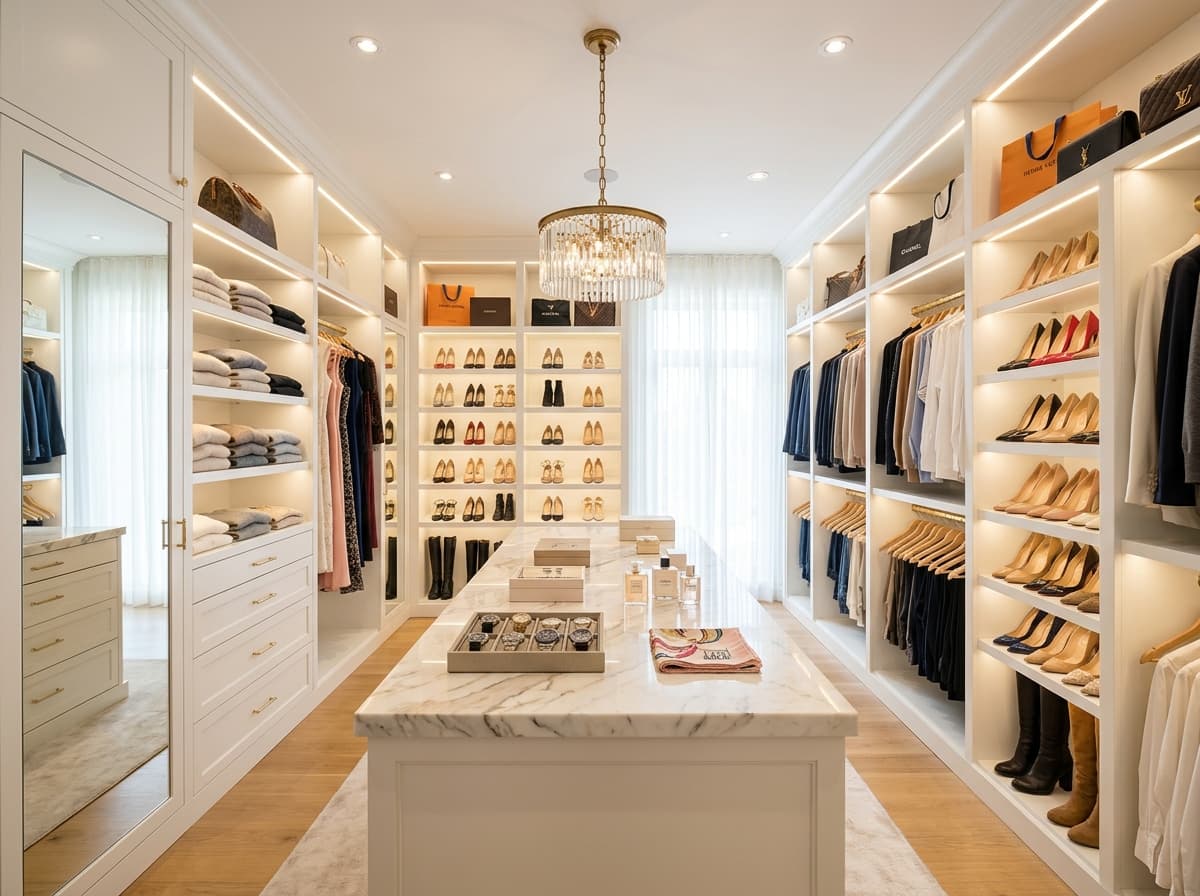
Three primary layout patterns solve different space challenges. The U-shaped layout places hanging rods on two parallel walls with an island or central storage unit down the middle. This configuration maximizes hanging capacity (often 40-50% more than other layouts) and provides 360-degree access to every piece. It works beautifully in villa master bedrooms with dedicated dressing rooms and works best in spaces 12+ square meters. The L-shaped layout uses two perpendicular walls, combining one full-length wall (typically 2-3 meters of hanging and shelving) with a second wall providing additional storage. This pattern works perfectly in corner bedrooms, apartments with alcoves, and spaces 8-12 square meters. It balances storage capacity with space efficiency, leaving generous open floor area for comfortable movement and dressing. The single-wall layout concentrates all storage on one wall, using vertical space aggressively. Double-hanging systems, floor-to-ceiling shelves, and specialized organizers maximize efficiency in compact spaces (6-8 square meters). While limiting compared to U- or L-shaped designs, a well-planned single-wall layout functions beautifully for focused wardrobes. Regardless of which pattern suits your space, ensure minimum 24 inches of clear floor space for comfortable walking and dressing.
How Should Lighting Actually Work Inside Your Walk-In Closet?
Lighting determines whether your walk-in closet functions or fails daily. Poor lighting makes colour-matching impossible (you grab what you think is black, step outside into bright daylight, and realize it's charcoal). Strategic lighting solves this entirely. Ambient overhead lighting from recessed LEDs or flush-mount fixtures should provide even illumination across the entire spaceâavoid overhead-only designs that cast shadows on hanging areas. Task lighting inside shelving units and above mirrors illuminates specific sections, making small details (patterns, shades) visible. Accent lighting on display shelves or behind glass-fronted sections creates visual interest while serving function. Aim for warm-white LEDs (3000K color temperature) that replicate natural daylight without harsh blue tones. This color temperature enables accurate colour matching while maintaining the wardrobe's warm, inviting aesthetic. Motion-activated or touch-dimmer controls add convenienceâlights activate when you enter and adjust to preferred brightness without fumbling for switches. Most professional designs allocate AED 2,000-AED 8,000 for integrated lighting, depending on complexity. This investment pays dividends through better outfit decisions and a wardrobe that feels welcoming daily.
How Do You Organize a Walk-In Closet So It Actually Stays Organized?
Organization strategy matters more than square footage. A 50-square-meter disorganized walk-in frustrates you daily. A 30-square-meter well-organized one serves you beautifully. Start by categorizing your wardrobe: work pieces, casual wear, dresses, outerwear, shoes, accessories. Allocate hanging space proportionallyâif 40% of your wardrobe is work blouses, allocate 40% of your hanging rods to work clothing. Color-coordinate within categories for visual harmony and faster selection (arrange from cool to warm tones: whites, blacks, greys, blues, greens, then warm reds and oranges). This progression creates natural visual flow. Vertical organization matters: full-length hanging rods (1,400mm height) for dresses and coats go on upper levels, short-hang rods (900-1,000mm for shirts and blazers) go below, maximizing vertical space without crowding. Shelves hold folded sweaters and knitwear organized vertically (not stacked) using the KonMari method, so you see all options without disturbing the stack. Drawers organize delicates, intimates, and accessories with dividers preventing items from shifting. Pull-out storage systems let you access back items without moving front pieces. Hooks for belts, scarves, and ties hang frequently-worn accessories at eye level. Baskets on upper shelves store off-season items in labeled, breathable fabric boxes. Once organized, maintenance takes minutesâmost professionals recommend a 10-minute weekly tidy-up returning items to designated spots, a monthly inventory check (noting if certain pieces never get worn), and seasonal rotation every 3-4 months.
What Storage Systems Work Best for Different Clothing Types?
Effective walk-in design matches storage systems to your actual wardrobe. Hanging rods are foundationalâstandard rails accommodate standard hangers, but double-hanging systems (two rods stacked vertically) multiply capacity. Most designs use a 60/40 or 50/50 split between hanging and folded/drawer storage, though this varies by wardrobe composition. Business professionals with mostly hanging pieces might go 70% hanging, 30% shelving. Those with significant sweater/knitwear collections benefit from 40% hanging, 60% shelving and drawers. Soft-close drawers with quality slides (rated 45kg capacity, 15,000+ cycles) protect delicate items and prevent slamming. Pull-out systems on shelves let you access back items without disturbing front piecesâcritical for organized drawers holding jewelry, watches, or accessories. Open cubbies display designer bags or current-season accessories while keeping them dust-free. Glass-fronted sections create gallery displays for valued pieces. Shoe racks with pull-out baskets (not fixed shelves) let you see every pair and access deep-stored shoes without moving forward rows. Cedar-lined sections protect against moths. Tie racks, belt hooks, and scarf organizers vertical-hang accessories, preventing wrinkles and keeping them visible. Motion-activated LED interior lighting reveals every section. The right combination of specialized storage systems transforms a closet from frustrating to genuinely enjoyable.
Why Does Walk-In Closet Design Require Professional Humidity Management?
Dubai's climate (45+ degrees Celsius summers, 65-80% humidity peaks) creates moisture conditions that destroy poorly designed wardrobes. Standard MDF without treatment swells and warps within months. Moisture-resistant MDF with factory water-repellent treatment performs reliablyâthis is baseline specification in professional designs, not an upgrade. Premium lacquer finishes seal wood, creating moisture barriers superior to veneer or paint. Marine-grade plywood backing on lower sections (where humidity is highest due to floor proximity) adds extra protection. Ventilation gaps every 150mm between shelves allow air circulation, preventing mold and mildew. Strategic positioning away from exterior walls and direct sunlight minimizes temperature fluctuations and condensation. Optional dehumidifiers or humidity sensors maintain optimal moisture levels (30-50% relative humidity is ideal). Cedar-lined interior sections regulate moisture naturally. All hardware uses stainless steel or coated metals (regular steel corrodes in salt air). These design elements aren't optional luxuriesâthey're essential engineering for any closet built to last in the UAE.
Need help designing your perfect wardrobe or closet? Talk to us.